MOST RECENT

Antibiotics course.1-Quinolones : lecture

Contents :-
Quinolones and fluoroquinolones.
Other quinolones.
Basic structure of the quinolones.
Mechanism of action.
Spectrum of fluroquinolones.
Quinolones dosage.
Main side effects.
Interactions with quinolones.
Contraindications.
Ciprofloxacin.
Norfloxacin.
Ofloxacin.
Lomefloxacin and enoxacin.
New fluoroquinolones.

Uses of fluoroquinolones.
Practical notes.
Rapid review.
Test yourself.
Resources.


=============================================================

free counters

3:59 PM | Posted in , , , , | Read More »

General anesthetic drugs : note

# General anesthetic drugs are :-
    • Inhaled :-  * Halothane.   * Isoflurane.  * Nitrous oxide.
    • Intravenous :-   * Ketamine.   * Propofol.
    ============================================================================
    free counters

    3:00 AM | Posted in , , , | Read More »

    Drugs used for chemotherapy emesis control : note

    # The drugs which are used for chemothyrapy emesis control are :-
    • 5HT3 blockers as Ondansetron & Granisetron.
    • Metoclopramide + Corticosteroids.
    • Benzodiazepine (Alprazlam & Lorazepam).
    ============================================================================
    free counters

    3:01 AM | Posted in , , , | Read More »

    Anti-depressant drugs : note

    # Anti-depressant drugs are :-
    • Selective seratonin re-uptake inhibitors :-
    1. Citalopram.
    2. Escitalopram.
    3. Fluxetine.
    4. Paroxetine.
    • Tricyclic antidepressants :-
    1. Amitriptyline.
    2. Doxepin.
    3. Imipramine.
    • Monoamine oxidase inhibitors :-
    1. Selegiline.
    ===========================================================================
    free counters

    3:00 AM | Posted in , , , | Read More »

    Thyroid hormone disorders : lecture


    -Thyroid gland & Thyroid hormones.
    -How does Thyroid hormone is formed ?
    -Regulation of secretion.
    -Hypothyroidism.
    -Treatment of hypothyroidism .
    -Administration of Levothyroxin.
    -Levothyroxin interactions.
    -Levothyroxin cautions.
    -Hyperthyroidism .
    -Symptoms & treatment of Hyperthyroidism.
    -Removal of part or all of the thyroid.
    -Blockade of hormone release .
    -Inhibition of thyroid hormone synthesis.
    -Mechanism of action of antithyroid.
    -Administration of antithyroid drugs.
    -Antithyroid drugs interactions.
    -Antithyroid drugs cautions.
    -General notes.
    -Practical notes on levothyroxin.
    -Practical notes on antithroid drugs.
    -Rapid review.
    -Test yourself.


    free counters

    6:03 PM | Posted in , , , | Read More »

    Understanding of enzymes work : video

    * What is catalyst ?
    * What is the meaning of active site ?
    * Why does each enzyme is specific for certain molecule ?


      free counters

      4:54 PM | Posted in , , | Read More »

      Understanding of osmosis : video

      * What is the meaning of semipermeable membrane ?
      * What is the direction of solution through semipermeable membrane ?
      * What is the the meaning of osmosis ?


        free counters

        4:38 PM | Posted in , , | Read More »

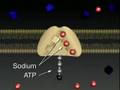
        Understanding of active transport and Na/K pump : video

        * How does the active transport occur ?
        * What is the role of ATP in active transport ?
        * What are the changes of sodium and pottasium concentration in the cell during active transport ?


          free counters

          2:03 PM | Posted in , , | Read More »

          The use of muscle relaxants in surgical procedures : rapid review

          # introduction

          * Acetylcholine is a major neurotransmitter in the autonomic nervous system. In the peripheral nervous system, acetylcholine activates muscles .
          * The enzyme acetylcholinesterase converts acetylcholine into the inactive metabolites choline and acetate .
          * Acetylcholinestrase enzyme is abundant in the synaptic cleft, and its role in rapidly clearing free acetylcholine from the synapse is essential for proper muscle function .
          * Acetylcholine receptor agonists and antagonists can either have an effect directly on the receptors or exert their effects indirectly, e.g., by affecting the enzyme acetylcholinesterase, which degrades the receptor ligand. Agonists increase the level of receptor activation. antagonists reduce it.
          * Certain neurotoxins work by inhibiting acetylcholinesterase, thus leading to excess acetylcholine at the neuromuscular junction, thus causing paralysis of the muscles needed for breathing and stopping the beating of the heart.

          # Muscle relaxants

          * Muscle relaxants Used as adjuncts to general anesthesia, to ensure that surgical procedures aren't distributed by muscle contraction of the patient.

          * Two types of those muscle relaxants used with anesthesia :

          1-Non- depolarizing :-

          a- (d-tubocurarin) : it is given intravenously as it is not absorbed in GIT .
          * Its effect start within 4 minutes & continues for 30 minutes
          * The duration of action of d-tubocurarin can be shortened by administrating its antidote neostigmine (ACH esterase inhibitor) so inhibit ACH breakdown .
          * Unwanted side effects result from non immune mediated release of histamine from mast cell leading to hypotension ,urticaria & bronchospasm .

          b- Pancuronium (pavulon) : is a synthetic compound now frequently used .
          * It's 5 fold more potent than d-tubocurarin & with somewhat longer duration & not likely to cause histamine release .
          * Side effects : increase heart rate & blood pressure due to M2 cholinoceptor blockade &this effect not shared by newer congeners like vecuronium & pibecuronium .

          2-depolarizing :-

          * This class contain only succinylcholines (succinyldicholine & suxamethonium) .
          * Its structure has double ACH molecule. it is not hydrolyzed by acetylcholinestrase but by butyrylcholinesterase, (a plasma cholinesterase). This hydrolysis by butyrylcholinesterase is much slower than that of acetylcholine by acetylcholinesterase.
          * Its effect start within seconds & continues for 10 minutes so used at the start of the anesthesia to facilitate intubation.
          * Side effects :
          1- histamine release (scoline apnea).
          2- hyperkalemia which may lead to cardiac arrhythmia .
          3- bradycardia .
          * Care must be taken during eye surgery ,as increasing in intraocular pressure may occur.

          *references: color atlas of pharmacology, drugs.com, wikepedia, medicine.net .
          *prepared by : Dr. Mustafa abd Eltawab .
          *all rights are reserved for pharmacist development group .
          =====================================================================free counters


          3:10 PM | Posted in , , , | Read More »

          Understanding of allergy : video

          * What is allergy?
          * Which are the common allergens ?
          * How does the body response to an allergen ?


            free counters

            12:24 AM | Posted in , , , | Read More »

            Lipid lowering agents : rapid review

            Preface

               Triglycerides:
                * main constituent of vegetable oil & animal fat .
                * High triglycerides (normal range 150mg/dl ) lead to atherogenesis  .
                * It's used by the body as energy store except for the brain
             
             Cholesterol:
            * Used as building block of biological membrane & precursor for most steroid hormones .
            * Rate limiting enzyme in cholesterol synthesis in the liver is HMGCA reductase enzyme .
            * Liver use cholesterol in the synthesis of bile acids & VLDL .
            * 85% of the blood cholesterol is produced in the body .

            Lipid lowering agents

            1- Statins (atorvastatin, fluvastatin, rosuvastatin, simvastatin) .
            * Mechanism of action : statins are inhibitors of HMGcoA reductase (hydroxyl methyl glutaryl co A enzyme) so they inhibit cholesterol synthesis .in addition to that, they increase expression of LDL receptor .
            * statins may occur naturally in some foods like mushroom & red yeast rice .
            * Cholesterol synthesis appears to occur mostly at night so short acting statin e.g.simvastatin ( zocor) must be taken at night to maximize its effect but long acting statin e.g.atorvastatin (lipitor) may be taken at any time .
            * The most potent statin [atorvastatin , rosuvastatin (crestor)]
            * The least potent statin {fluvastatin (lescol) }
            * The result of statin therapy appears rapidly may be after one week
            * Side Effects : rarely [skeletal musculature damage , liver enzymes become high ]

            2-fibrates (bezofibrate, etofibrate, gemfibrozil, fenofibrate)
            * Used as accessory therapy in many forms of hypercholesterolemia usually in combination with statins specially fenofibrate (tricor) and gemfibrozil (lopid600) because using of them with statin will increase muscle toxicity by decreasing statin metabolisms .
            * It's indicated solely for patient no tolerant to statin .
            * Mechanism of action :- activate PPAR (peroxisome proliferators activated receptor) which induce transcription of number of genes that facilitate lipid metabolism, also it decrease VLDL and increase HDL .
            * When triglycerides increase more than 1000mg/dl lead to pancreatitis with abdominal pain  &
               as fibrates decrease triglycerides they decrease pancreatitis .
               * Side effects : high risk of gallstones (use over several years) myopathy, myalgia and     rhabdomyolysis .
               * Usage of statins with fibrates may increase the likelihood of    rhabdomyolysis & liver 
               failure .

            3-nicotinic acid [niacin or vit b3 & its derivatives ]
            * Mechanism of action : stimulate endolthelial lipoprotein lipase so decease triglycerides .
            * At the first of the therapy PG mediated vasodilatation occur leading to 2 side effects {flushing and hypotension} .
            * To overcome these 2 side effects 325mg of ASA can be taken 30 min prior to nicotinic acid (niaspan) . also the extended release dosage decrease flushing
            * Flushing which occur as side effect of nicotinic acid may make nicotinic acid to be used for male impotence .
            * Deficiency of vit b3 may lead to pellagra disease  (3 diseases : diarrhea, dementia & dermatitis)

             4-cholesteramine & colestipol :
            * They are bile acid sequestrants which bind bile acid in the GIT & prevent its reabsorbtion . As bile acid decrease , liver convert cholesterol into bile acid so cholesterol decrease .
            * Side effects of cholesteran (questran) & colestipol (colestid) :
            a- diverse GIT disturbance (constipation , diarrhea) .
             b- decrease the absorption of lipid soluble vitamins (A,D,E,K) .
             c- decrease absorption of vit K antagonist , digitoxin , diuretics .
             * If used with any other drug (statin or other) must be taken 1hour after the
             drug or the other drug taken 4 hour after it as they bind statin in the intestine
             & decrease its absorption .

            5- omega-3 (polyunsaturated fatty acid [eicosapentanoate-docosahexapentaneoate]
            * Decrease each of (trigycerides, synsises of VLDL lipoprotein B , remnant particles) .
            * Although it doesn't decrease LDL or total cholesterol, with increasing some dietary supplements as fish-leafy green vegetables-nuts-hummus-eggs- linseed-flaxseed this decrease Congestive heart disease .
            6-probucol :
            decrease HDL more than LDL nonetheless decrease atherogenesis and that may be due to decreasing LDL oxidation .


            *references: color atlas of pharmacology, drugs.com, wikepedia, medicine.net, master of Egypt's drugs, master of Sadie's drugs . 
            *prepared by : Dr. Mostafa Abd eltawab .
            *all rights are reserved for pharmacist development group .

            ====================================================================================
            free counters


            10:53 AM | Posted in , , , | Read More »

            Understanding of acne : video


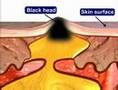
            *What is the relationship between acne and sebaceous gland, sebum & comedos ?


            * What do you know about acne causes, acne treatment, & acne sites on the body?


            * Sometimes comedos become with white heads and sometimes with black heads.Why ?


            id='single2'
            name='single2'
            src='http://www.fileden.com/files/2010/5/2/2846650/jwplayer_2.swf'
            width='470'
            height='320'
            bgcolor='undefined'
            allowscriptaccess='always'
            allowfullscreen='true'
            wmode='transparent'
            flashvars='file=http://www.youtube.com/watch?v=n7N0rzT7OtQ&feature=player_embedded'/>


            free counters


            12:29 AM | Posted in , , , , | Read More »

            Understanding of hypertention and its effects on the body : video


            * What is the relation between blood pressure and the blood flow & the heart rate ? 

            * What is the effects of high blood pressure on the following : heart, blood vessels, kidney, eye & brain ?


            id='single2'
            name='single2'
            src='http://www.fileden.com/files/2010/5/2/2846650/jwplayer_2.swf'
            width='470'
            height='320'
            bgcolor='undefined'
            allowscriptaccess='always'
            allowfullscreen='true'
            wmode='transparent'
            flashvars='file=http://www.youtube.com/watch?v=xnyfElxkBlI'/>


              free counters


              10:46 PM | Posted in , , , | Read More »

              How does the G Protein Receptor work : video

              * How does G protein receptor work ?


                free counters


                4:06 PM | Posted in , , | Read More »

                Recently Commented

                Recently Added