


Drugs used for chemotherapy emesis control : note

- 5HT3 blockers as Ondansetron & Granisetron.
- Metoclopramide + Corticosteroids.
- Benzodiazepine (Alprazlam & Lorazepam).
============================================================================


Drug name | # Acyclovir. |
Brand name | # Zovirax. |
Class of drug | # Antiviral agent. |
Indications | # Herpes simplex (HSV-1 and HSV-2) infections and immune-compromised host. # Genital herpes infections. # Herpes simplex encephalitis. # Herpes zoster infections. # Chickenpox infections. |
Mechanism of action | # Nucleotide analog; inhibits viral replication by termination of viral DNA chain and inhibition and inactivation of viral DNA polymerase. |
route / Dosage form | # Route : Oral, IV, Topical. # Dosage form : Cap 200; Tab 400, 800 mg; Inj 500 mg, 1 g; Inj 50 mg/mL; Oint 5%; Susp 40 mg/mL |
Dose | # Herpes simplex (HSV-1 and HSV-2) infections (immunocompromised host) * Adults, children >12 years: IV 5 mg/kg (infuse at constant rate over 1 hour), q8h for 7 days. * Children <12 years: IV 250 mg/m2 (infuse at constant rate for 1 hour), q8h. # Genital herpes * Adults, children >12 years: PO 200 mg q4h, five doses/day; 10 days for initial therapy. Dose for 5 days for intermittent recurrent disease. Administer up to 12 months for chronic disease (suppressive therapy). * Children <12 years: IV 250 mg/m2, t.i.d. for 10 days. # Herpes simplex encephalitis * Adults, children >12 years: IV 10 mg/kg (infuse at constant rate over 1 hour), q8h for 10 days. * Children, 6 months to 12 years: IV 500 mg/m2 (infuse at constant rate over 1 hour), q8h for 10 days. # Herpes zoster * Adults, children >12 years: PO 80 mg, q4h, five doses/day, 7–10 days. * Children <12 years: PO 250–600 mg/m2, 4–5 times/day, 7–10 days. # Chickenpox * Adults, children >40 kg: PO 800 mg, q.i.d. 5 days. * Children >2 years: PO 20 mg/kg q.i.d. (maximum 800 mg), 5 days. |
Pregnancy / Lactation | # Pregnancy: Category C. # Lactation: Appears in breast milk. |
Adverse reactions | # Common: headache, phlebitis (IV only). # Serious: seizures, renal failure, anaphylaxis, encephalopathy (confusion, hallucinations), coma, leukopenia, renal crystalline precipitant, elevated liver enzymes, Stevens–Johnson syndrome, urticaria. |
Important interactions | # Drugs that increase effects/toxicity of acyclovir: MAO inhibitors, probenecid, ziduvine, CNS depressants. # Drugs that decrease effects/toxicity of acyclovir: β blockers, guanethidine. |
Contraindications / precautions | # Use with caution in patients with the following conditions: kidney disease, neurologic disease. # Beware of renal dysfunction especially if patient is taking other nephrotoxic drugs. # Women with genital herpes should have annual Pap smears. # Rapid bolus administration may cause crystalline precipitation in renal tubules and renal insufficiency. # Patients receiving acyclovir IV must remain well hydrated during treatment and for 24 hours after treatment. # Cases of thrombotic thrombocytopenic purpura/hemolytic uremia syndrome have been reported with high-dose acyclovir in immunocompromised patients. |
Other notes | # Kidney disease: dose should be adjusted according to creatinine clearance. # Pediatric: Safety has not been established in children <2 years old. |
Practical notes | # Drink 2–3 L of fluid per day. This is particularly important following IV infusion. # Avoid sexual intercourse when lesions are present; otherwise use condoms. # Avoid contact of the drug with or around the eyes. # Resume treatment at first indication of recurrence of infection. # Use a finger cot or latex glove when applying acyclovir ointment. The ointment might cause transient burning or stinging. |
Trade names | # Egypt :- Zovirax, Acyclovir, Virustat, Novirus, Lovir, Cycloviral. # KSA :- Zovirax, Virustat, Acyclovir, Acivir, Clovir, Custiviral, Deforax, Herpavir, Imavir, Lovrak, Medvirox, Noviral, Novirax, , |

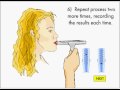 * How to use a peak flow meter ?


Drug name | # Acetylcysteine. |
Brand name | # Mucomyst. |
Class of drug | # Mucolytic agent. # antidote. |
Indications | # Mucolytic agent in Bronchial disorders, chronic bronchitis, asthma, emphysema, pulmonary complications of surgery. # Antidote for acetaminophen poisoning. |
Mechanism of action | # As mucolytic agent: disrupts disulfide bonds in mucoproteins thereby lowering viscosity of mucus. # As antidote for acetaminophen poisoning: complexes with hepatotoxic free radial metabolite of acetaminophen and inactivates it. |
route / Dosage form | # Route : Oral, inhalation, IV. # Dosage form : Soln: 10, 20% |
Dose | # Bronchial disorders, chronic bronchitis, asthma, emphysema, pulmonary complications of surgery :- * Adults: 6–10 mL of 10% solution, q2–3 hours by nebulizer. * Children: 3–5 mL of 10% solution, q2–3 hours by nebulizer. * Infants: 2–4 mL of 10% solution, t.i.d. to q.i.d., IV. * Alternate: 20% solution may be given in half of above volumes. # Antidote for acetaminophen poisoning * Adults, children: Initially 140 mg/kg, then 70 mg/kg q4h orally x 17 doses. All 17 doses must be given, even if acetaminophen levels have declined to non-toxic range. If patient has emesis with 1 hour of dose, repeat dose immediately. |
Pregnancy / Lactation | # Pregnancy: Category B. # Lactation: No data available. Best to avoid. |
Adverse reactions | # Common: vomiting, olfactory disturbance. # Serious: bronchospasm (especially in asthmatics), hypotension. |
Important interactions | # None |
Contraindications / precautions | # As inhaled drug: may induce bronchospasm. If this occurs, administer bronchodilator; suction bronchial secretions if they develop after inhalation. # Elderly: May have reduced cough reflex and therefore reduced ability to clear airway of liquefied mucus. May need concomitant suction. # For patient with asthma or hyperactive airway disease, a bronchodilator should be administered before acetylcysteine. |
Other notes | # To be given before meals and just before bedtime for asthma. # As antidote for acetaminophen poisoning: Administer as quickly as possible. Most useful if given within 12 hours of ingestion of acetaminophen. |
Practical notes | # Rinse mouth out and wash face after treatment to remove adhering drug. |
Generic names | # Egypt :- Acetylcistein , ACC , Mucomyst . # KSA :- ------ |

 * What is the use of Epipen ?


